Understanding Silver Tarnishing, Silver Plating Quality, and Long-Term Surface Protection
Introduction
Silver jewellery looks beautiful when it has a bright, smooth, and highly reflective finish. But maintaining that appearance over time can be a challenge for jewellery manufacturers and silver electroplating businesses.
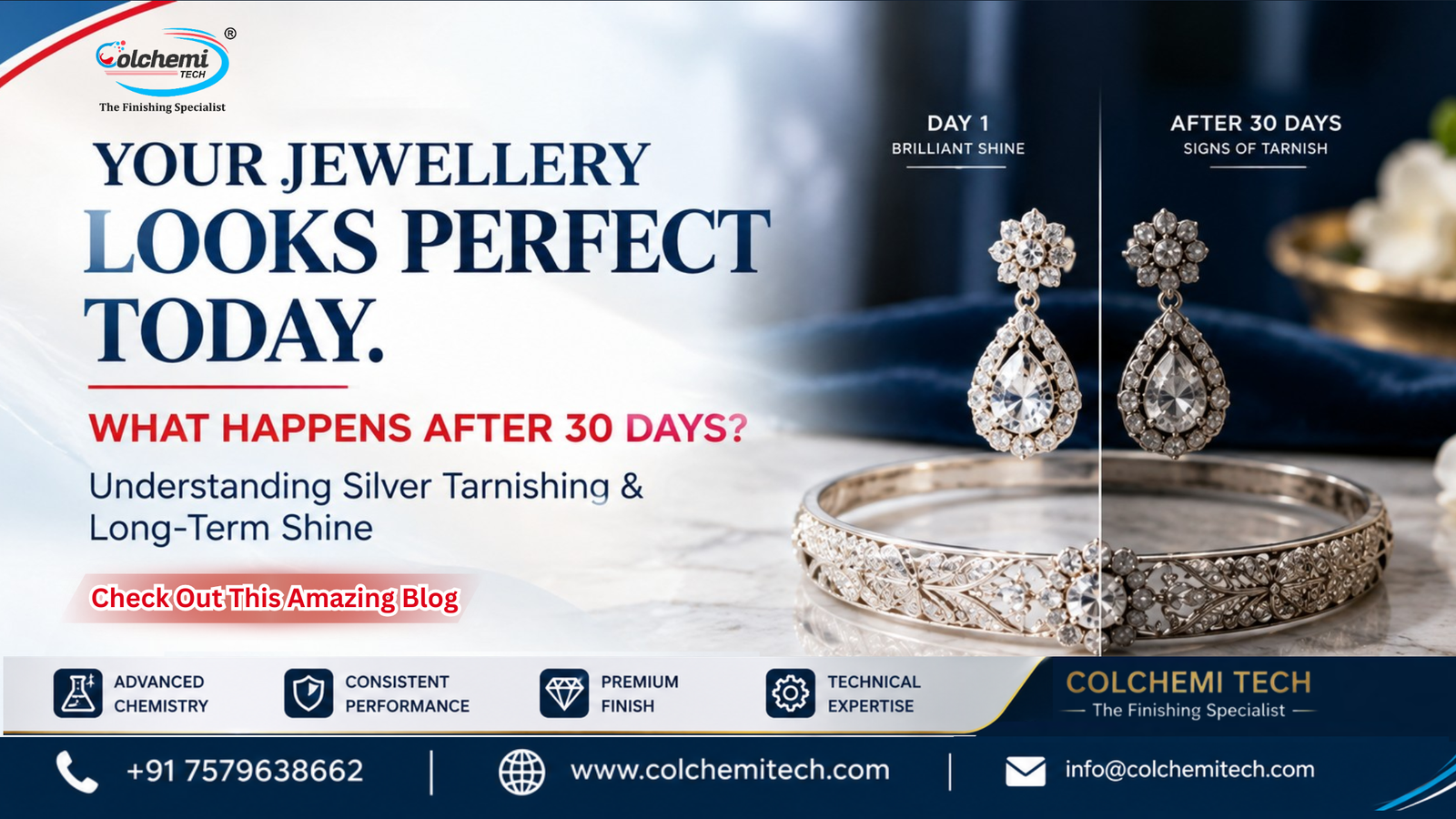
A piece of jewellery may look perfect immediately after plating, yet its appearance can change during storage, transportation, or regular use. Tarnishing, surface contamination, inconsistent plating, and unsuitable storage conditions can all affect the final finish.
This raises an important question: Is your silver plating process delivering only an attractive finish today, or are you also evaluating how well that finish performs over time?
Understanding the factors that influence silver plating quality can help manufacturers improve process consistency, reduce finishing-related rework, and make better decisions when selecting silver plating chemicals.
1. Why Does Silver Jewellery Lose Its Shine?
One of the common concerns in the silver jewellery industry is the gradual loss of brightness after production.
Silver can react with sulphur-containing compounds in the environment, forming silver sulphide on the surface. This process, known as silver tarnishing, may cause the jewellery to develop yellow, brown, grey, or black discoloration.
Several factors can influence the appearance and tarnishing behaviour of silver jewellery:
- Exposure to sulphur-containing gases and environmental contaminants.
- Humidity and storage conditions.
- Residues or contamination remaining after manufacturing.
- Plating thickness, surface condition, and process consistency.
- The suitability of the protective treatment used after plating.
For manufacturers, understanding these factors is an important step toward maintaining silver jewellery finishing quality.
2. Is Your Silver Plating Process Consistent?
A bright silver finish depends on more than the selection of a silver plating solution. Surface preparation, plating bath condition, chemical balance, operating parameters, and substrate quality all contribute to the final result.
If these factors are not properly controlled, manufacturers may experience variations in brightness, uneven deposits, dull patches, or inconsistent results between production batches.
Using suitable silver electroplating chemicals and following the recommended operating procedures can help manufacturers work toward a more uniform finish.
Regular monitoring of the plating bath and systematic quality checks can also help identify potential process issues before they affect larger production batches.
3. What Is the Role of a Silver Brightener?
A silver brightener is an important component in many silver electroplating processes where a bright, smooth, and attractive surface finish is required.
The right silver plating brightener, used under appropriate operating conditions, can help achieve the desired appearance according to the formulation and application requirements.
When evaluating a silver brightener, manufacturers should consider:
- The required brightness and surface appearance.
- Compatibility with the existing silver plating bath.
- Recommended chemical concentration and operating conditions.
- Consistency across production batches.
- Technical guidance and product-specific application instructions.
Selecting the appropriate silver brightener Part A and Part B system requires understanding how the individual components function within the intended process.
A suitable chemical system, combined with effective process control, can support consistent silver finishing results.
4. Silver Brightener vs. Anti-Tarnish Treatment: What Is the Difference?
Silver brighteners and anti-tarnish treatments perform different roles in the finishing process.
Silver Brightener: A silver plating brightener is used to help achieve the required brightness and surface appearance during electroplating.
Anti-Tarnish Treatment: An anti-tarnish treatment is designed to help protect the finished silver surface against tarnishing under specified conditions.
A bright surface does not automatically mean the jewellery has adequate tarnish resistance. Similarly, an anti-tarnish treatment cannot correct every underlying plating defect.
For this reason, jewellery manufacturers should evaluate both the quality of the plating process and the suitability of the post-plating protection system.
Appropriate testing under relevant storage and application conditions can help assess whether the finished jewellery meets the required quality standards.
5. How Can You Improve Long-Term Silver Finishing Quality?
Maintaining a consistent silver finish requires a systematic approach throughout the production process.
Proper Surface Preparation
Ensure that jewellery components are appropriately cleaned before plating. Surface residues and contamination can affect deposit quality and the final appearance.
Controlled Silver Electroplating
Monitor relevant bath parameters and follow the recommended operating conditions for the selected silver plating chemicals.
Consistent Chemical Management
Use the specified chemical concentrations and replenishment procedures. Avoid making adjustments without understanding the product’s technical requirements.
Suitable Post-Plating Protection
Evaluate an appropriate anti-tarnish treatment when the application requires additional protection against tarnishing.
Quality Testing and Inspection
Inspect finished products for brightness, uniformity, visible defects, and other relevant quality parameters. Where long-term appearance matters, suitable tarnish-resistance testing can help evaluate performance.
These practices can help manufacturers improve process control and work toward more reliable silver jewellery finishing quality.
6. Why Does Silver Plating Quality Matter for Jewellery Manufacturers?
For jewellery manufacturers, finishing quality directly influences the appearance of the final product and the customer’s overall experience.
Inconsistent silver plating may result in additional inspections, production rework, rejected pieces, and customer complaints.
A well-managed finishing process can help businesses work toward:
- Consistent silver jewellery brightness.
- Improved surface appearance and uniformity.
- Better control over plating-related defects.
- More efficient quality inspection.
- Greater confidence in finished jewellery.
The objective is not simply to achieve a bright finish immediately after production. It is to establish a controlled process that consistently meets the required quality specifications.
7. Discover Silver Finishing Solutions from Colchemi Tech
At Colchemi Tech, we understand the importance of suitable chemical selection and consistent process management in silver electroplating applications.
Our COLSILBER® 20X Dual Brightener System — Part A + Part B Liquid Concentrate is intended for silver-finishing applications where the required brightness and surface appearance are important.
When selecting a silver brightener system, manufacturers should consider their plating process, bath conditions, substrate requirements, desired finish, and the product’s technical recommendations.
Whether you are reviewing silver plating chemicals for jewellery manufacturing or looking to improve consistency in your existing process, selecting the appropriate chemical system is an important part of the evaluation.
Colchemi Tech is committed to supporting the silver finishing industry with specialised chemical solutions and a focus on finishing quality.
Conclusion: Don’t Judge Silver Jewellery by Its First-Day Shine Alone
Your jewellery may look perfect today, but its appearance after 30 days depends on several factors, including environmental exposure, surface preparation, plating quality, storage conditions, and protective treatments.
For jewellery manufacturers, the right approach is to evaluate not only initial brightness but also consistency, durability requirements, and performance under relevant conditions.
Better silver finishing begins with suitable chemistry, controlled processes, and the right approach to surface protection.
Looking for suitable silver plating chemicals or a silver brightener system for your application?
Connect with Colchemi Tech to discuss your silver finishing requirements.
COLCHEMI TECH — The Finishing Specialist
Website: https://www.colchemitech.com
Phone: +91 75796 38662
Email: info@colchemitech.com