Understanding the Causes of Discoloration, Surface Imperfections, and Silver Plating Quality
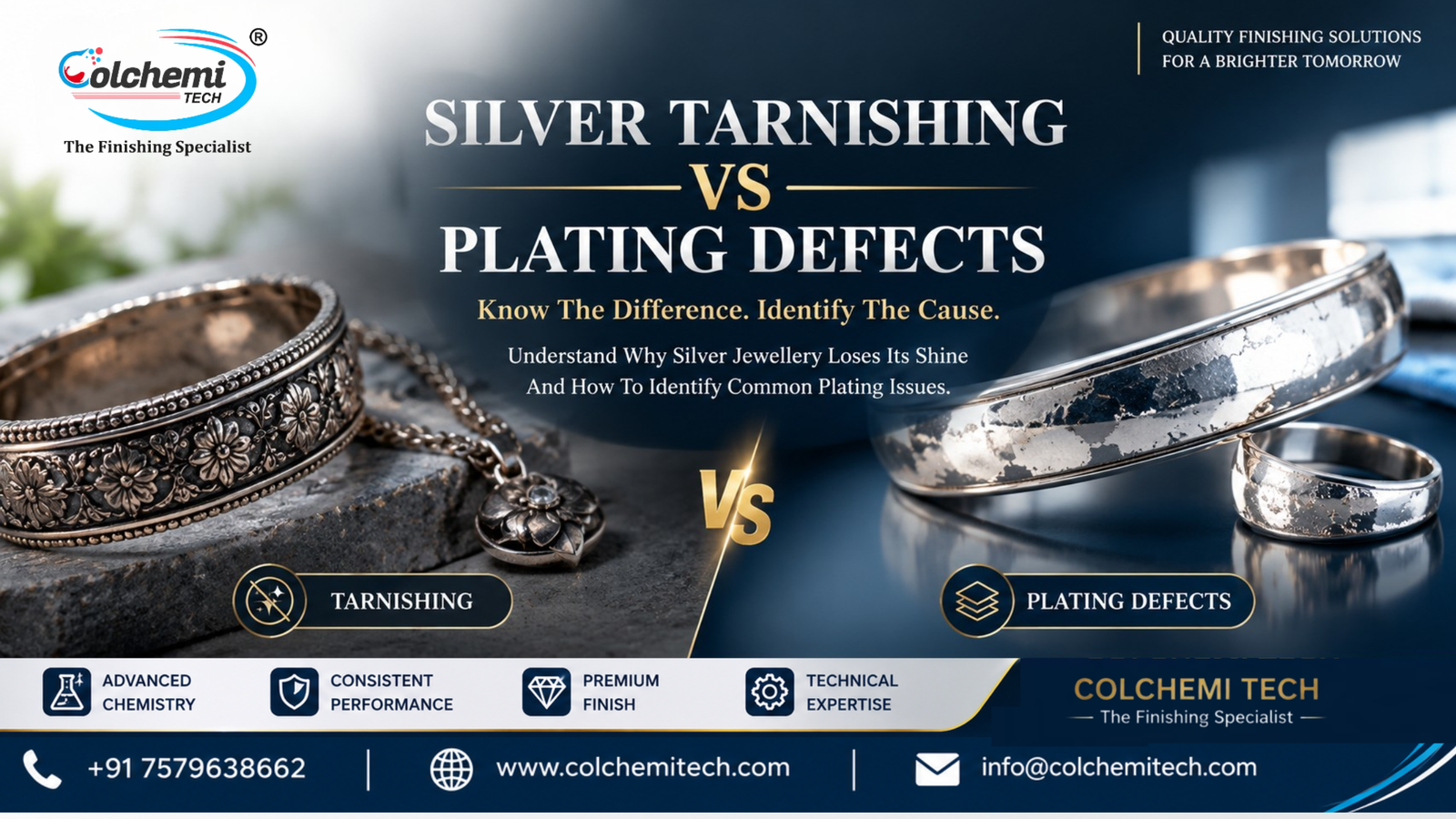
Silver jewellery is valued for its brightness, elegant appearance, and reflective finish. However, over time, manufacturers and jewellery businesses may encounter problems such as dark discoloration, uneven colour, dullness, peeling, or surface imperfections.
Although these issues can sometimes look similar, they do not necessarily have the same cause.
Two important problems to understand are silver tarnishing and silver plating defects. Identifying the difference is an essential step towards effective troubleshooting, consistent finishing quality, and better product evaluation.
In this guide, we explore how these problems differ, what may cause them, and how jewellery manufacturers can investigate them systematically.
1. What Is Silver Tarnishing?
Silver tarnishing is a chemical reaction that changes the appearance of a silver surface. It commonly occurs when silver reacts with sulfur-containing compounds in the surrounding environment, forming a layer of silver sulfide.
This reaction can cause silver to develop yellowish, brown, grey, or black discoloration, depending on the conditions and the extent of tarnishing.
Common factors that may contribute to tarnishing include:
- Environmental exposure: Sulfur-containing gases and other reactive substances can affect the silver surface.
- Storage conditions: Packaging materials, humidity, and surrounding contaminants may influence tarnishing behaviour.
- Handling and contamination: Residues from hands, cosmetics, or other materials can affect surface appearance.
- Time and exposure: The duration and conditions of exposure can influence how quickly discoloration develops.
Importantly, silver-plated jewellery can also tarnish because its outer surface contains silver. Tarnishing does not automatically mean that the plating has failed.
2. What Are Silver Plating Defects?
Silver plating defects are imperfections associated with the plating process, the condition of the underlying surface, or the performance of the deposited coating.
Unlike ordinary tarnishing, these problems may involve the uniformity, adhesion, texture, or coverage of the plated layer.
Common examples include:
Uneven Colour or Brightness
Some areas may appear brighter, duller, or different in colour from others. Possible causes include inconsistent surface preparation, variations in plating conditions, or differences in the underlying material.
Poor Adhesion or Peeling
If the plated layer does not bond adequately to the substrate or an underlying coating, it may peel, flake, or separate. Surface contamination and unsuitable process conditions are among the possible causes.
Pitting and Roughness
Small pits, bumps, or rough areas can affect the visual quality of jewellery. These imperfections may be associated with surface preparation, contamination, trapped gas bubbles, or other process-related factors.
Incomplete or Uneven Coverage
Certain areas may receive insufficient coverage, resulting in visible differences in appearance or exposed underlying material.
Premature Surface Deterioration
A coating that loses its appearance or integrity earlier than expected may require investigation of plating thickness, adhesion, wear conditions, and the finishing process.
Understanding the specific defect is important because different problems require different corrective actions.
3. Silver Tarnishing vs. Plating Defects: Key Differences
| Feature | Silver Tarnishing | Silver Plating Defects |
|---|---|---|
| Primary issue | Chemical change in the silver surface | Imperfection in coating quality or performance |
| Typical appearance | Yellow, brown, grey, or black discoloration | Peeling, pits, roughness, uneven colour, or incomplete coverage |
| Possible causes | Sulfur compounds and environmental exposure | Surface preparation, contamination, deposition conditions, or adhesion problems |
| Where it occurs | On exposed silver surfaces, including silver plating | Within or across the plated coating and its interface with underlying layers |
| Investigation focus | Exposure history, storage, contamination, and surface chemistry | Plating process records, coating condition, adhesion, and coverage |
| General approach | Identify the cause of discoloration and assess appropriate cleaning or protection | Identify the defect mechanism and correct the relevant process issue |
An important distinction: These problems can overlap. Tarnishing can occur on a coating that is otherwise intact, while a plating defect can also lead to discoloration. Visual inspection alone cannot always establish the root cause.
4. How Can Jewellery Manufacturers Identify the Difference?
A systematic investigation can help distinguish tarnishing from a plating-related problem.
Step 1: Examine the Surface Carefully
Observe the colour, location, and pattern of the affected areas. Look for dark discoloration, peeling edges, visible pits, roughness, or exposed substrate.
Check whether the problem affects the entire piece or appears only in specific areas.
Step 2: Review When the Problem Appeared
Consider whether the issue was visible immediately after plating, during inspection, after packaging, or following a period of use or storage.
A defect present immediately after processing may indicate a process-related issue, while discoloration that develops later may suggest environmental exposure. Neither observation alone is conclusive.
Step 3: Review Storage and Handling Conditions
Check packaging materials, storage conditions, handling practices, and possible sources of contamination.
This is particularly relevant when similar jewellery pieces develop discoloration after being stored together.
Step 4: Check the Plating Process
Review the relevant process records, including surface preparation, cleaning, bath condition, operating parameters, and any deviations from established procedures.
Where appropriate, evaluate coating thickness, adhesion, and surface condition using suitable inspection or testing methods.
Step 5: Confirm the Root Cause Before Making Changes
Avoid changing chemicals or operating parameters based solely on appearance. Where the cause is uncertain, consult a qualified plating professional and use appropriate testing to verify the diagnosis.
A correct diagnosis helps prevent repeated rework and unnecessary process adjustments.
5. How Can Finishing Quality Be Improved?
Although tarnishing and plating defects have different mechanisms, a disciplined quality-control approach can help manufacturers address both more effectively.
Maintain proper surface preparation. Cleaning and preparation should be suitable for the substrate and the intended plating process.
Monitor process conditions. Follow the established operating range and the chemical supplier’s technical instructions. Record relevant process parameters to help identify variations.
Inspect finished components consistently. Use defined quality criteria for appearance, coverage, and other relevant performance requirements.
Review storage and packaging. Select materials and conditions appropriate for silver-plated products to help minimise unwanted environmental exposure.
Investigate recurring issues. Document the type of defect, its location, the production batch, and when it appeared. This information can help identify patterns and guide corrective action.
No single finishing chemical or process adjustment can resolve every type of tarnishing or plating defect. The appropriate solution depends on the verified cause and the requirements of the application.
6. The Role of Brighteners in Silver Finishing
Brighteners can play an important role in silver-plating processes by influencing the appearance and deposit characteristics under the conditions for which they are formulated.
However, brightness and tarnish resistance are not the same property. A bright finish does not automatically guarantee long-term resistance to discoloration, and a brightener should not be assumed to correct adhesion failures, pitting, or every other plating defect.
For jewellery manufacturers, selecting a suitable brightener requires consideration of the plating system, substrate, process conditions, technical documentation, and intended application.
At Colchemi Tech, our focus is on finishing solutions for industrial applications. COLSILBER® 20X Brightener Part A and Part B are part of our product range for silver-finishing professionals. Manufacturers should consult the applicable product documentation and technical guidance to confirm suitability and use requirements for their specific process.
Conclusion
Silver tarnishing and silver plating defects may produce similar visual symptoms, but understanding their underlying causes is essential for effective troubleshooting.
Tarnishing generally involves a chemical change at the silver surface, whereas plating defects may involve coating adhesion, coverage, texture, or deposition quality. Both can affect the appearance of jewellery, but they require different approaches to investigation.
By combining careful inspection, appropriate testing, consistent process monitoring, and suitable storage practices, jewellery manufacturers can make more informed decisions about finishing quality and corrective action.
At Colchemi Tech, we believe that better finishing begins with understanding the process behind the surface.
Looking for Silver Finishing Solutions?
Connect with Colchemi Tech to discuss your silver-finishing requirements and learn more about our COLSILBER® product range.
Colchemi Tech — The Finishing Specialist
- Phone: +91 7579638662
- Email: info@colchemitech.com
- Website: https://www.colchemitech.com/