
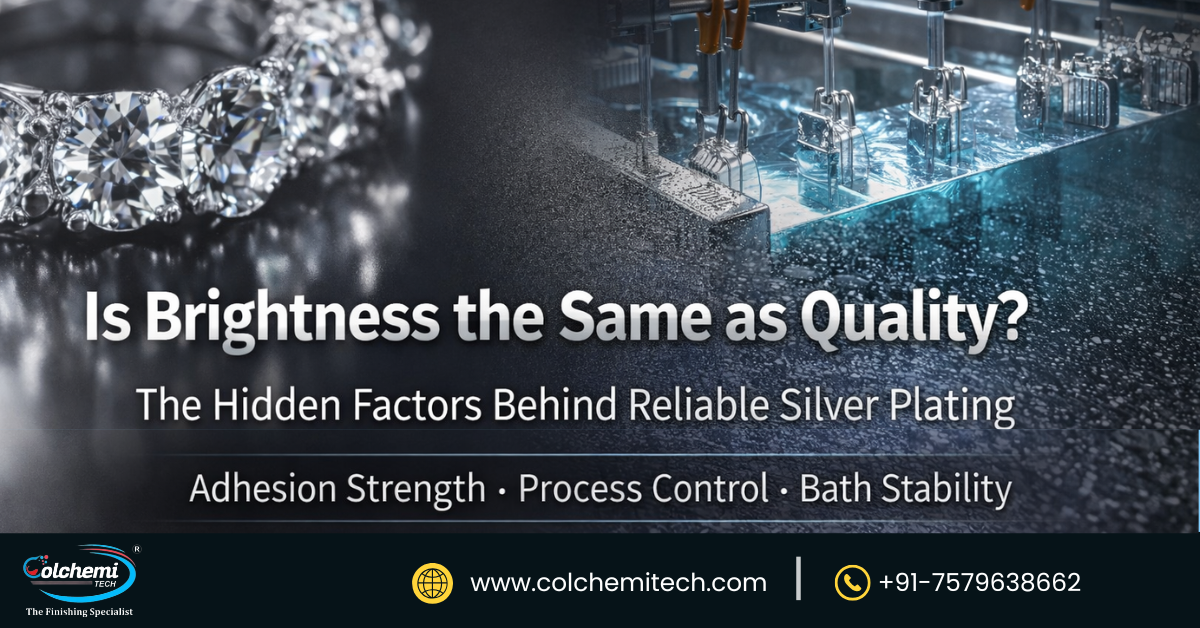
In the electroplating industry, one thing often gets the most attention — Maximum Brightness.
A mirror-like finish immediately gives the impression of premium quality. Many Jewellery manufacturers and plating units judge the result simply by looking at the shine of the surface.
But here is an important question:
Does a brighter surface always mean better plating quality?
The answer is No.
In reality, true plating quality depends on several hidden factors that are not always visible to the eye.
The Problem with Focusing Only on Brightness
Brightness is important in jewellery plating. Customers expect a clean and shiny finish.
However, when plating units focus only on increasing brightness, they sometimes ignore other critical aspects of the plating process.
This can lead to problems such as:
- Peeling of coating
- Blistering on the surface
- Weak adhesion
- Short plating life
- Export rejection
In many cases, the product looks perfect today, but issues appear after polishing, packaging, or shipment.
That is when the real cost of poor process control becomes visible.
Hidden Factors That Define Real Plating Quality
1. Adhesion Strength
Adhesion strength means how strongly the silver layer sticks to the base metal.
Even if the surface looks very bright, poor adhesion can cause the coating to peel or crack during polishing or use.
Strong adhesion ensures that the plating remains stable and durable.
2. Process Control
Electroplating is a chemical and electrical process. Small variations can create big problems.
Key factors that need proper control include:
- Current density
- Temperature
- Chemical concentration
- Plating time
Consistent process control leads to consistent results.
3. Chemical Balance
A plating bath contains several chemicals that must remain balanced.
If brightener, additives, or metal concentration are not maintained properly, the bath can become unstable.
This may result in:
- Uneven deposits
- Stress in the coating
- Reduced plating quality
Regular monitoring and correct dosing are essential.
4. Bath Stability
Over time, plating baths can accumulate contamination or unwanted metal impurities.
If the bath is not maintained properly, it can start producing inconsistent results.
Stable plating baths help maintain:
- Smooth deposits
- Uniform brightness
- Long bath life
5. Proper Surface Preparation
One of the most important but often ignored steps in plating is surface preparation.
Before plating begins, the metal surface must be properly cleaned and activated.
This includes processes like:
- Degreasing
- Pickling
- Rinsing
If the surface is not prepared correctly, even the best plating chemicals cannot produce strong adhesion.
Why Consistency Matters More Than Temporary Shine
In manufacturing, consistency is more valuable than extreme brightness.
A surface that looks bright today but fails tomorrow can damage a manufacturer’s reputation.
In the jewellery export market, buyers often perform quality checks such as:
- Adhesion tests
- Durability tests
- Surface inspection
If plating fails during these tests, the entire batch may be rejected.
This leads to financial loss and loss of customer trust.
The Right Approach to Silver Plating
Instead of chasing maximum brightness alone, plating units should focus on balanced process management.
This includes:
✔ Maintaining proper bath chemistry
✔ Monitoring process parameters regularly
✔ Using reliable plating chemicals
✔ Ensuring proper surface preparation
✔ Controlling contamination
When these factors are managed correctly, brightness and durability can be achieved together.
Final Thoughts
Brightness attracts attention, but quality builds reputation.
In electroplating, the true measure of quality is not just how the surface looks today, but how well it performs over time.
For jewellery manufacturers and plating units, focusing on process stability, adhesion strength, and chemical balance will always deliver better long-term results than chasing temporary shine.
Because in the end, consistent quality always wins over temporary perfection.