Introduction
In jewellery manufacturing, consistency is everything.
Yet many silver plating units operate without a clearly defined Standard Operating Procedure (SOP).
Daily adjustments, visual judgement, and experience-based corrections become the norm.
While this may work temporarily, it often leads to:
- Inconsistent shine
- Rising rejection rates
- Increasing chemical cost
- Unpredictable plating performance
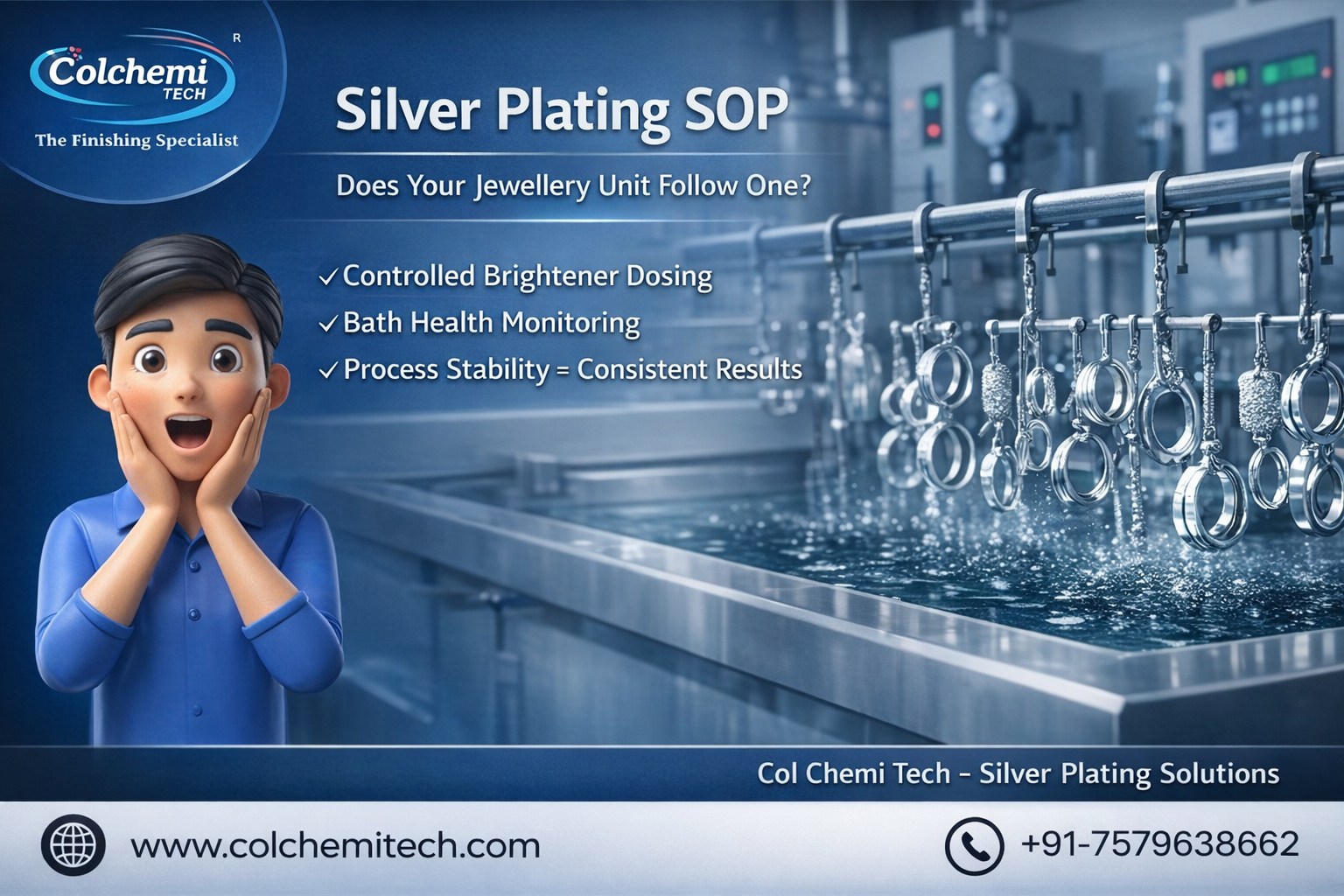
A structured Silver Plating SOP transforms plating from trial-and-error into a controlled manufacturing process.
What Is a Silver Plating SOP?
A Standard Operating Procedure (SOP) is a documented step-by-step system that defines:
- Bath preparation method
- Brightener dosing guidelines
- Temperature control range
- Filtration schedule
- Bath monitoring frequency
- Rinsing and drying process
It ensures that plating quality does not depend on guesswork or individual judgement.
Why Many Jewellery Units Don’t Follow SOP
Common reasons include:
- “We have been doing it this way for years.”
- Reliance on operator experience
- Lack of technical documentation
- No bath health tracking system
However, as production scale increases, inconsistency also increases.
Key Elements of an Effective Silver Plating SOP
1️⃣ Bath Health Monitoring
Regular checks for:
- Introduction
In jewellery manufacturing, consistency is everything.
Yet many silver plating units operate without a clearly defined Standard Operating Procedure (SOP).
Daily adjustments, visual judgement, and experience-based corrections become the norm.
While this may work temporarily, it often leads to:
Inconsistent shine
Rising rejection rates
Increasing chemical cost
Unpredictable plating performance
A structured Silver Plating SOP transforms plating from trial-and-error into a controlled manufacturing process.
What Is a Silver Plating SOP?
A Standard Operating Procedure (SOP) is a documented step-by-step system that defines:
Bath preparation method
Brightener dosing guidelines
Temperature control range
Filtration schedule
Bath monitoring frequency
Rinsing and drying process
It ensures that plating quality does not depend on guesswork or individual judgement.
Why Many Jewellery Units Don’t Follow SOP
Common reasons include:
“We have been doing it this way for years.”
Reliance on operator experience
Lack of technical documentation
No bath health tracking system
However, as production scale increases, inconsistency also increases.
Key Elements of an Effective Silver Plating SOP
1️⃣ Bath Health Monitoring
Regular checks for:
Metal concentration
Impurity level
Brightener balance
Prevents sudden performance drop.
2️⃣ Controlled Brightener Dosing
Clear instructions:
When to add
How much to add
Based on what parameter
Reduces overdosing and wastage.
3️⃣ Temperature Stability
Define acceptable temperature range.
Even small fluctuations can affect deposit quality.
4️⃣ Filtration & Maintenance Schedule
Impurities build up slowly.
Scheduled filtration keeps bath condition stable.
5️⃣ Post-Plating Handling SOP
Proper rinsing, drying, and handling reduce:
Surface marks
Tarnish risk
Final finish defects
How SOP Improves Business Performance
When plating is system-driven:
✔ Rejection decreases
✔ Chemical cost becomes predictable
✔ Shine remains consistent
✔ Customer complaints reduce
✔ Production planning improves
Consistency builds long-term client trust.
The Col Chemi Tech Perspective
At Col Chemi Tech, we believe silver plating is not just about chemicals — it is about process discipline.
High-purity silver brighteners perform best when supported by:
Stable bath conditions
Controlled dosing
Structured monitoring
We support jewellery manufacturers in building process-oriented plating systems for long-term stability.
Conclusion
If your jewellery unit does not have a defined Silver Plating SOP, your plating process depends on daily adjustments.
And adjustment-based manufacturing always creates hidden instability.
A documented, controlled, and monitored plating SOP is the foundation of consistent quality and sustainable growth